


ADHD Assessments
ADHD Assessments
Assessing Attention-Deficit/Hyperactivity Disorder (ADHD) in adults involves a blend of subjective and objective methods to ensure a thorough evaluation. Traditionally, ADHD assessments have utilized rating scales like the Adult ADHD Self-Report Scale (ASRS) and the Diagnostic Interview for Adult ADHD (DIVA). The ASRS, developed by the World Health Organization, features a series of questions aimed at gauging the frequency and severity of ADHD symptoms according to DSM criteria. It is useful for initial screening but relies on self-reported data, which can be influenced by individual biases. The DIVA, on the other hand, provides a more in-depth assessment through a semi-structured interview that explores both historical and current symptoms, giving a detailed picture of the disorder’s impact on daily life.
QBTest

To complement these subjective tools, objective measures such as the QbTest have emerged as an important component of ADHD assessment. The QbTest, developed by QbTech, utilizes advanced technology to objectively measure attention, impulsivity, and activity levels through a computerized assessment. The test requires the participant to complete a task that is designed to simulate typical cognitive and behavioral challenges faced in everyday life. During this task, the system records and analyzes the participant’s performance, providing quantitative data on their attentional control and impulsivity. Research has demonstrated that the QbTest can enhance diagnostic accuracy by providing objective metrics that complement traditional assessment methods. For instance, a study published in the journal European Psychiatry in 2018 found that the QbTest significantly correlated with clinical assessments and rating scales, showing a high level of accuracy in distinguishing between individuals with ADHD and those without. The study reported that the QbTest’s objective measures, such as reaction time variability and error rates, were consistent with the diagnostic criteria for ADHD, thereby validating its use as a reliable assessment tool. Another study in The British Journal of Psychiatry (2020) indicated that the QbTest improved diagnostic precision and treatment monitoring, highlighting its utility in both initial assessments and ongoing management of ADHD. By integrating these objective measures with traditional rating scales and interviews, clinicians can achieve a more holistic understanding of an individual’s ADHD profile, leading to more accurate diagnoses and tailored treatment plans. This multidimensional approach ensures that the complexity of adult ADHD is effectively addressed, paving the way for better management and support for those affected by the disorder.
ADHD Evaluations with QbTest Telehealth powered by QbCheck – what should you expect?
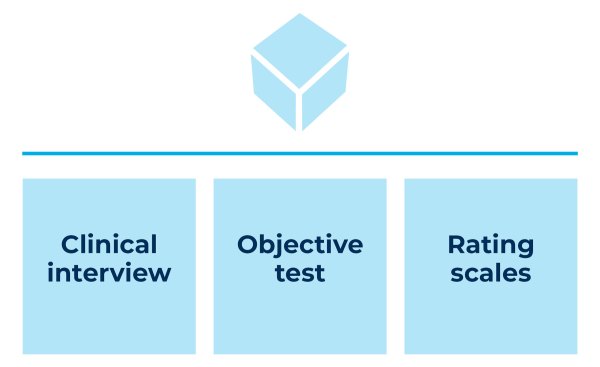
A diagnostic assessment for ADHD involves three main parts: gathering a clinical history through an interview with your provider, an objective measurement of symptoms remotely, and the completion of one or more rating scales.
What is QbTest Telehealth powered by QbCheck?
QbTest Telehealth is an FDA-cleared test measuring all three core symptom domains; hyperactivity, impulsivity, and inattention. It is used when evaluating ADHD symptoms and measuring response to ADHD treatment. Both the in-clinic (QbTest) and remote version (QbCheck) involve a 15 or 20-minute computer-based task that measures your ability to maintain attention and impulse control. Meanwhile, an infrared camera tracks movements, and therefore activity, during the test. The results are based on a comparison of your performance with data from other people of the same sex and age.
What does the Telehealth set-up look like?
You can complete the test at home on your own PC or Mac. It must meet the minimum specification requirements for the ADHD assessment.
What do QbTest Telehealth results look like?
Sample QbTest Telehealth reports are shown below: [side-by-side comparison reports]
![[side-by-side comparison reports]](https://www.qbtech.com//srv/htdocs//srv/htdocs/wp-content/uploads/2023/07/QbTest-Result-Sample-scaled.jpeg)
When will I receive my results?
The raw data is available immediately after the test is completed. However, your clinician must first interpret the data together with other relevant information.

Your Mental Wellness Journey
Take the first step towards your mental wellness journey by requesting
an appointment with Inlight Psychiatry & Therapy clinic below.